Early childhood education is one of the most important stages in a child’s learning journey. It provides young children with opportunities to develop essential skills, explore their surroundings, build relationships, and become prepared for future education.
The early years are a particularly important period of growth. UNICEF describes early childhood as a critical stage for cognitive, social, emotional, and physical development, while the National Association for the Education of Young Children (NAEYC) emphasizes that early childhood lays foundations for later learning and development.
Quality early childhood education is not simply about teaching children letters and numbers. It involves creating safe, engaging environments where children can learn through play, communication, exploration, relationships, and meaningful experiences.
What Is Early Childhood Education?
Early childhood education refers to organized learning and development experiences designed for young children before they enter or progress through primary school. Depending on the education system, programs may include preschool, pre-primary education, nursery programs, kindergarten, childcare-based learning, and other early learning settings.
The broader field of early childhood development generally considers development from birth through around age eight, covering physical, cognitive, language, social, and emotional growth.
Early childhood education focuses on helping children develop the knowledge, skills, confidence, and habits that support future learning.
Why Is Early Childhood Education Important?
The first years of life provide a major opportunity to establish strong foundations for future development. Children learn rapidly through interactions with parents, caregivers, educators, peers, and their environments.
UNICEF notes that the early years are a period of extraordinary growth and that strong foundations can contribute to improved school learning and longer-term educational outcomes.
Early childhood education can help children:
- Develop communication and language skills
- Build early mathematical understanding
- Improve social interaction
- Develop emotional awareness
- Strengthen problem-solving abilities
- Build independence and confidence
- Develop physical and motor skills
- Become comfortable with structured learning
- Prepare for primary school
These benefits demonstrate why early education should be considered an important part of a child’s overall development rather than simply preparation for kindergarten or primary school.
Major Benefits of Early Childhood Education
1. Supports Cognitive Development
Young children are naturally curious. Early childhood classrooms can turn that curiosity into learning through questions, experiments, stories, puzzles, building activities, and exploration.
Children can begin developing memory, attention, reasoning, observation, and problem-solving skills. Effective educators provide activities that challenge children appropriately while giving them the support they need to succeed.
2. Builds Language and Communication Skills
Language is central to learning. Children develop vocabulary and communication skills by listening to adults, talking with classmates, participating in stories, singing songs, asking questions, and describing their experiences.
Reading aloud is particularly valuable because it exposes children to new vocabulary, sentence structures, ideas, and concepts.
For children growing up with more than one language, recognizing and supporting their home language can also contribute to meaningful learning experiences. NAEYC emphasizes the importance of language and communication in early learning.
3. Encourages Social Development
Early childhood education gives children opportunities to interact with people outside their immediate family.
Through group activities and play, children learn to:
- Share materials
- Take turns
- Cooperate
- Listen to others
- Express ideas
- Resolve simple conflicts
- Form friendships
- Respect differences
These social skills become increasingly important as children move through school and participate in larger communities.
4. Develops Emotional Skills
Children need opportunities to recognize and manage emotions. A supportive early learning environment can help them understand feelings, communicate their needs, develop patience, and respond to everyday challenges.
Positive relationships with caring educators can also help children develop confidence and a sense of security. High-quality early childhood programs can provide consistent, responsive relationships that support healthy development and resilience.
5. Promotes Physical Development
Early childhood education should support physical development alongside academic and social learning.
Activities such as running, climbing, dancing, drawing, cutting, building, and manipulating small objects can support gross- and fine-motor development.
A balanced program can combine active movement with quieter activities such as reading, drawing, storytelling, and puzzles.
6. Improves School Readiness
One of the major purposes of early childhood education is helping children transition successfully into formal schooling.
School readiness is not limited to knowing the alphabet or counting. Children also need to develop the ability to listen, follow routines, communicate, cooperate, concentrate, manage emotions, and participate in learning activities.
Quality early education can help establish these foundational abilities before children enter primary school.
Learning Through Play
Play is a fundamental part of early childhood education.
Children can learn mathematical, language, social, physical, and problem-solving skills while playing with blocks, pretend-play materials, puzzles, art supplies, books, games, and outdoor equipment.
NAEYC recommends combining self-directed play, guided play, and intentional teaching rather than treating play as separate from learning.
For example, a simple building activity can introduce:
- Shapes and spatial awareness
- Counting
- Balance
- Planning
- Cooperation
- Vocabulary
- Creativity
- Problem solving
The educator’s role is to observe children’s interests, provide suitable resources, ask thoughtful questions, and extend learning when appropriate.
The Role of Teachers in Early Childhood Education
Early childhood educators have a significant influence on children’s experiences.
A good early childhood teacher does more than deliver lessons. They create a welcoming environment, observe children’s development, encourage curiosity, communicate with families, and adapt activities to individual needs.
Developmentally appropriate teaching considers children’s age, abilities, interests, family backgrounds, languages, cultures, and previous experiences.
Effective educators may:
- Ask open-ended questions
- Encourage children to explain their thinking
- Provide hands-on activities
- Read stories regularly
- Support cooperative play
- Give specific and constructive feedback
- Offer choices
- Adjust activities to different abilities
- Encourage independence
- Create an inclusive classroom environment
The Importance of Parents and Families
Education does not begin or end at the classroom door. Parents and caregivers play an important role in children’s early learning.
Simple activities at home can support development, including:
- Reading together
- Talking about daily experiences
- Singing songs
- Counting everyday objects
- Drawing and coloring
- Cooking together
- Exploring nature
- Playing simple games
- Encouraging children to ask questions
Parents can also communicate with educators about their child’s interests, strengths, challenges, language, and experiences. Strong relationships between families and educators can make children’s learning more consistent.
Creating a Quality Early Childhood Learning Environment
A quality early childhood environment should be safe, welcoming, inclusive, and stimulating.
Children benefit from classrooms that provide a variety of age-appropriate materials and opportunities for exploration. Learning spaces can include areas for reading, creative activities, construction, dramatic play, science exploration, quiet time, and physical movement.
The environment should also allow children to make choices and participate actively in learning. NAEYC highlights the importance of meaningful experiences, child choice, exploration, and appropriately challenging activities.
Inclusion in Early Childhood Education
Every child deserves meaningful opportunities to participate in early learning.
Inclusive early childhood education recognizes differences in ability, language, culture, background, and learning style. Educators can adapt materials, activities, communication methods, and classroom environments so that children can participate successfully.
Inclusion benefits children by promoting belonging, participation, positive relationships, and opportunities to reach their developmental potential.
Technology and Early Childhood Education
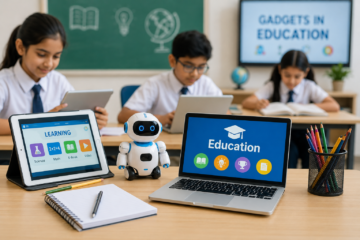
Technology can have a place in early learning, but it should be used thoughtfully.
Digital tools can support storytelling, creative expression, communication, music, and exploration when they are age-appropriate and integrated into meaningful learning experiences.
However, technology should not replace hands-on play, physical activity, conversation, social interaction, books, or relationships with caring adults.
The goal should be to use technology as one educational resource rather than allowing screens to become the primary learning experience.
Early Childhood Education in India
In India, early childhood care and education is closely connected with broader early childhood development. UNICEF India describes early childhood development as involving nutrition and health, hygiene, protection, and responsive stimulation, alongside learning and development.
This broader perspective is important because education works best when children also have access to appropriate nutrition, health support, safety, responsive caregiving, and stimulating environments.
Early learning programs can therefore contribute not only to academic preparation but also to children’s overall well-being.
Challenges in Early Childhood Education
Despite its importance, access to high-quality early childhood education remains uneven.
Some common challenges include:
- Limited access to quality programs
- Shortages of trained educators
- Unequal educational resources
- Large class sizes
- Financial barriers for families
- Lack of appropriate learning materials
- Differences in language and cultural backgrounds
- Limited support for children with disabilities
- Insufficient family engagement
Addressing these challenges requires cooperation among families, educators, communities, governments, and education organizations.
How to Choose an Early Childhood Education Program
Parents looking for an early childhood program can consider several factors.
Safety
The learning environment should be clean, secure, child-friendly, and appropriately supervised.
Qualified Educators
Teachers and caregivers should understand child development and use age-appropriate teaching practices.
Learning Through Play
Look for programs that combine intentional teaching with opportunities for exploration and play.
Family Communication
Good programs maintain open communication with parents and caregivers.
Individual Attention
Children should receive support according to their developmental level, interests, strengths, and needs.
Inclusive Practices
The program should welcome children from different backgrounds and provide appropriate support for individual differences.
Balanced Activities
A strong program should include language, early mathematics, creative activities, physical movement, social development, outdoor experiences, and opportunities for independent exploration.
The Future of Early Childhood Education
The future of early childhood education will likely place even greater emphasis on individualized learning, inclusion, family engagement, educator development, and evidence-based teaching.
Technology may provide additional tools for educators and families, but relationships and human interaction will remain central to early learning.
The most effective approach is likely to be one that combines knowledgeable educators, supportive families, safe environments, meaningful play, appropriate technology, and developmentally appropriate learning experiences.
Conclusion
Early childhood education provides children with much more than their first exposure to school. It helps build the foundations for communication, social interaction, emotional development, physical skills, curiosity, confidence, and lifelong learning.
Quality early education recognizes that children learn through relationships, play, exploration, communication, and meaningful experiences. Research and guidance from organizations such as UNICEF and NAEYC reinforce the importance of creating supportive early learning environments during these formative years.
Investing in early childhood education means investing in children’s future. When young learners receive the support, care, and learning opportunities they need, they are better positioned to enter school with confidence and continue developing throughout life.

0 Comments